Choosing the right sunglasses can be confusing, especially when you come across terms like UV400 and Polarized. Many people assume they mean the same thing, while others believe one is always better than the other.
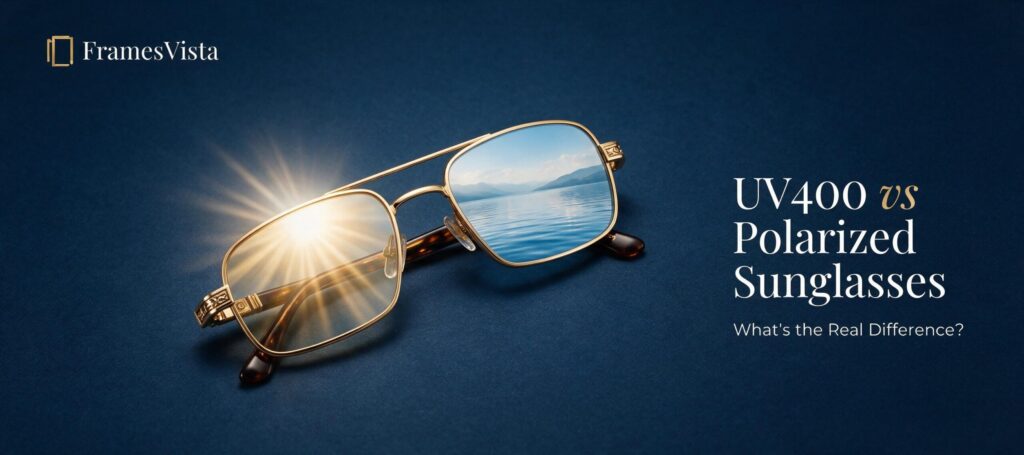
The truth is that UV400 protection and polarized lenses serve two completely different purposes. One protects your eyes from harmful ultraviolet (UV) radiation, while the other reduces glare to improve visual comfort and clarity.
Understanding this difference is essential before purchasing a new pair of sunglasses. Whether you’re shopping for everyday wear, driving, outdoor sports, or travel, knowing what each feature offers will help you make a smarter decision.
In this complete FramesVista guide, we’ll explain how UV400 and polarized lenses work, compare their benefits, clear up common misconceptions, and help you choose the best option based on your lifestyle.
Quick Answer
UV400 and polarized are not the same.
- UV400 protection blocks almost all harmful UVA and UVB rays up to 400 nanometers, helping protect your eyes from ultraviolet radiation.
- Polarized lenses reduce glare caused by sunlight reflecting off surfaces such as roads, water, snow, and glass.
For the best outdoor eye protection, many premium sunglasses combine both UV400 protection and polarized lenses, giving you protection from harmful UV rays while also reducing glare for clearer, more comfortable vision.
Table of Contents
- What Is UV400?
- What Are Polarized Lenses?
- UV400 vs Polarized: Key Differences
- Comparison Table
- Benefits of UV400 Sunglasses
- Benefits of Polarized Sunglasses
- Which One Should You Choose?
- Best for Driving
- Best for Everyday Use
- Common Myths
- Frequently Asked Questions
- Final Thoughts
Why Understanding the Difference Matters
Many buyers focus only on the appearance of sunglasses without checking the lens technology. However, the features built into the lenses have a much greater impact on eye protection and visual comfort than the frame style alone.
Choosing the wrong type of sunglasses may leave your eyes exposed to harmful UV rays or cause unnecessary discomfort in bright conditions.
By understanding the purpose of UV400 protection and polarization, you’ll be able to choose sunglasses that match your daily activities and provide the level of protection your eyes deserve.
Who Should Read This Guide?
This guide is ideal for:
- Drivers looking for safer daytime visibility
- Outdoor enthusiasts
- Beach and travel lovers
- Cyclists and runners
- Hikers and campers
- Anyone buying their first quality sunglasses
- People comparing different lens technologies before making a purchase
Whether you’re investing in premium sunglasses or simply upgrading your everyday eyewear, understanding these two features will help you make an informed choice.
What Is UV400?
UV400 is a lens protection standard that indicates sunglasses can block almost 100% of harmful ultraviolet rays with wavelengths up to 400 nanometers. This includes both UVA and UVB rays, which are invisible to the human eye but can damage eye tissues over time.
Unlike the dark tint of a lens, UV400 protection is built into the lens material or coating. This means even clear or lightly tinted lenses can provide excellent UV protection if they are certified as UV400.
Think of UV400 as a protective shield for your eyes against the sun’s invisible ultraviolet radiation.
Why Is UV Protection Important?
Long-term exposure to ultraviolet rays can increase the risk of several eye problems.
Potential effects of excessive UV exposure include:
- Eye irritation
- Photokeratitis (sunburn of the eye)
- Cataracts
- Damage to the cornea
- Increased risk of certain retinal conditions
- Premature aging of eye tissues
Wearing sunglasses with UV400 protection helps reduce these risks, especially if you spend a lot of time outdoors.
Benefits of UV400 Sunglasses
Choosing UV400 sunglasses offers several important advantages.
Complete UV Protection
The biggest benefit is blocking harmful UVA and UVB rays before they reach your eyes.
Suitable for Everyday Use
Whether you’re walking, driving, shopping, traveling, or relaxing outdoors, UV400 protection is valuable in almost every daylight situation.
Helps Protect Long-Term Eye Health
Consistent use of UV-protective sunglasses may help reduce cumulative damage caused by years of sun exposure.
Available in Almost Every Style
UV400 protection is available in:
- Fashion sunglasses
- Sports sunglasses
- Prescription sunglasses
- Polarized sunglasses
- Children’s sunglasses
This means you don’t have to compromise on style to protect your eyes.
What Are Polarized Lenses?
Polarized lenses are designed to reduce glare, not ultraviolet radiation.
They contain a special filter that blocks horizontally reflected light from surfaces such as:
- Roads
- Water
- Snow
- Glass buildings
- Car hoods
By reducing glare, polarized lenses provide clearer, sharper, and more comfortable vision in bright outdoor conditions.
How Do Polarized Lenses Work?
When sunlight reflects from flat surfaces, it becomes concentrated into horizontal light waves. These reflections create intense glare that can make it difficult to see comfortably.
Polarized lenses contain a microscopic vertical filter that blocks these horizontal light waves while allowing useful light to pass through.
As a result, you experience:
- Less glare
- Better contrast
- Sharper vision
- Reduced eye fatigue
- Improved outdoor visibility
This is why polarized sunglasses are especially popular among drivers, boaters, anglers, cyclists, and outdoor enthusiasts.
Benefits of Polarized Sunglasses
Superior Glare Reduction
The biggest advantage is significantly reducing reflections from bright surfaces.
Improved Visual Comfort
Your eyes work less to adjust to bright reflected light, making long outdoor activities more comfortable.
Better Contrast
Colors often appear richer, and objects become easier to distinguish in bright sunlight.
Ideal for Outdoor Activities
Polarized lenses are excellent for:
- Driving
- Fishing
- Boating
- Hiking
- Cycling
- Beach vacations
- Golf
- Snow activities
UV400 and Polarization Are Not the Same
This is where many people become confused.
UV400 protects your eyes from harmful ultraviolet rays.
Polarization reduces glare from reflected light.
A pair of sunglasses can have:
- UV400 only
- Polarized only
- Both UV400 and Polarized (the ideal combination)
When shopping for sunglasses, don’t assume that polarized lenses automatically provide UV400 protection. Always check the product specifications to confirm both features.
UV400 vs Polarized: Key Differences
Although UV400 protection and polarized lenses are often mentioned together, they solve two different problems.
UV400 protects your eyes from invisible ultraviolet radiation that can contribute to long-term eye damage.
Polarized lenses improve visual comfort by reducing glare from reflective surfaces such as roads, water, snow, and glass.
The ideal sunglasses for most outdoor activities combine both technologies, giving you complete UV protection along with clearer, glare-free vision.
UV400 vs Polarized Comparison
| Feature | UV400 Sunglasses | Polarized Sunglasses |
|---|---|---|
| Blocks UVA & UVB Rays | ✅ Yes | Only if UV400 is included |
| Reduces Glare | ❌ No | ✅ Yes |
| Improves Visual Clarity | Good | Excellent |
| Reduces Eye Fatigue | Moderate | Excellent |
| Ideal for Driving | Good | Excellent |
| Best for Water Activities | Good | Excellent |
| Everyday Sun Protection | Excellent | Excellent (when UV400 is included) |
| Price | Usually More Affordable | Generally Higher |
Which One Should You Choose?
The right sunglasses depend on how you plan to use them.
Choose UV400 Sunglasses If You:
- Need reliable everyday UV protection
- Mostly walk, travel, or spend casual time outdoors
- Want affordable quality sunglasses
- Are buying sunglasses for children or general daily use
UV400 protection should be considered the minimum standard for any quality pair of sunglasses.
Choose Polarized Sunglasses If You:
- Drive regularly during the day
- Spend time near water
- Enjoy fishing or boating
- Go hiking or cycling frequently
- Want maximum visual comfort in bright sunlight
Polarized lenses provide a noticeable improvement in outdoor visibility by minimizing glare.
The Best Choice: UV400 + Polarized
For most people, the ideal option is sunglasses that include both UV400 protection and polarized lenses.
This combination provides:
- Complete UVA and UVB protection
- Significant glare reduction
- Better color contrast
- Improved visual clarity
- Reduced eye fatigue
- More comfortable outdoor vision
Many premium sunglasses today include both features, making them an excellent investment for long-term eye comfort.
Best for Driving
Driving during bright daylight often means dealing with reflections from:
- Roads
- Windshields
- Car hoods
- Wet pavement
- Traffic signs
Polarized sunglasses help reduce these reflections, allowing drivers to see the road more comfortably.
For the safest daytime driving experience, look for sunglasses that offer:
- UV400 protection
- Polarized lenses
- Comfortable frame fit
- High-quality optical lenses
Best for Everyday Use
If your sunglasses are mainly used for:
- Walking
- Shopping
- Commuting
- Outdoor cafes
- Casual travel
A quality pair of UV400 sunglasses may be all you need.
However, if you frequently encounter strong sunlight and reflective environments, upgrading to polarized lenses can make everyday wear noticeably more comfortable.
Buying Tips
Before purchasing sunglasses, always check the product description.
Look for:
- 100% UVA & UVB Protection (UV400)
- Polarized lenses (if glare reduction is important)
- Scratch-resistant coating
- Comfortable frame material
- Proper fit for your face shape
- High optical clarity
Avoid buying sunglasses based solely on lens darkness. Dark lenses without UV protection may actually be worse for your eyes because they cause your pupils to dilate while still allowing harmful UV rays to enter.
Common Myths About UV400 and Polarized Sunglasses
There are several misconceptions about sunglasses that often confuse buyers. Let’s separate the facts from the myths.
Myth 1: UV400 and Polarized Mean the Same Thing
Fact: They are completely different features.
- UV400 protects your eyes from harmful ultraviolet radiation.
- Polarized lenses reduce glare from reflective surfaces.
One protects your eye health, while the other improves visual comfort.
Myth 2: Darker Lenses Provide Better UV Protection
Fact: The darkness of a lens has nothing to do with its UV protection.
A very dark lens without UV400 protection may actually be harmful because it causes your pupils to dilate, allowing more ultraviolet rays to reach your eyes.
Always look for 100% UVA & UVB Protection (UV400) instead of judging sunglasses by lens color.
Myth 3: Polarized Sunglasses Always Include UV400 Protection
Fact: Not always.
Many premium polarized sunglasses include UV400 protection, but polarization alone does not guarantee UV protection.
Before purchasing, check the product specifications to ensure both features are included.
Myth 4: Everyone Needs Polarized Sunglasses
Fact: Not necessarily.
If you mainly wear sunglasses for casual outdoor activities, UV400 protection alone may be sufficient.
Polarized lenses become especially valuable if you:
- Drive frequently
- Spend time near water
- Enjoy outdoor sports
- Travel in bright sunny conditions
Choose the option that best fits your lifestyle.
Frequently Asked Questions
Is UV400 enough to protect my eyes?
Yes. Sunglasses with UV400 protection block nearly all harmful UVA and UVB rays up to 400 nanometers, making them an excellent choice for everyday eye protection.
Should I buy UV400 or Polarized sunglasses?
Ideally, choose sunglasses that offer both UV400 protection and polarized lenses. This combination provides UV protection while reducing glare for greater visual comfort.
Are polarized sunglasses worth the extra cost?
For people who drive regularly, enjoy outdoor activities, or spend time around reflective surfaces, many find polarized sunglasses worth the investment because of the improved clarity and reduced glare.
Can children wear polarized sunglasses?
Yes. Children can wear polarized sunglasses, especially during outdoor activities. However, the most important feature is ensuring the lenses provide 100% UV protection (UV400).
Do polarized lenses affect mobile phone screens?
Some digital displays may appear darker or show color patterns when viewed through polarized lenses. This depends on the screen technology and the viewing angle.
Final Thoughts
When comparing UV400 and polarized sunglasses, it’s important to remember that they are designed for different purposes—not competing technologies.
UV400 protection helps safeguard your eyes from harmful ultraviolet radiation, while polarized lenses improve comfort by reducing glare and enhancing visual clarity.
For the best overall experience, especially if you spend a lot of time outdoors, look for sunglasses that combine both UV400 protection and polarized technology. This gives you comprehensive eye protection along with a clearer and more comfortable view in bright conditions.
At FramesVista, we recommend choosing sunglasses based on your lifestyle, daily activities, and comfort needs rather than focusing on just one feature. A well-made pair of sunglasses can protect your vision while helping you enjoy every outdoor moment with confidence.
Related Articles
Continue learning with these helpful guides:
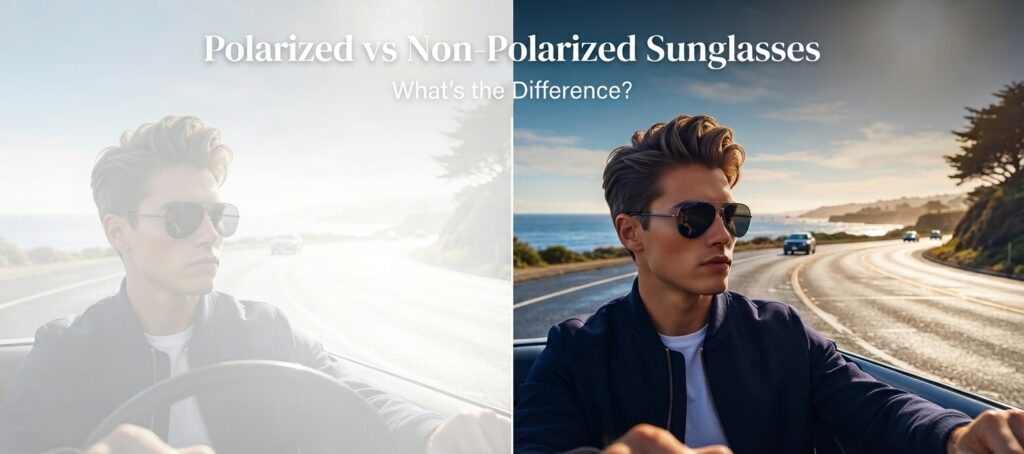
- Polarized vs Non-Polarized Sunglasses: What’s the Difference?
- The Complete Eye Care Guide
- Blue Light Glasses: Myths vs Facts
- How to Choose the Right Eyeglass Frames for Your Face Shape
These articles will help you better understand eye protection, lens technology, and how to choose eyewear that fits your lifestyle.