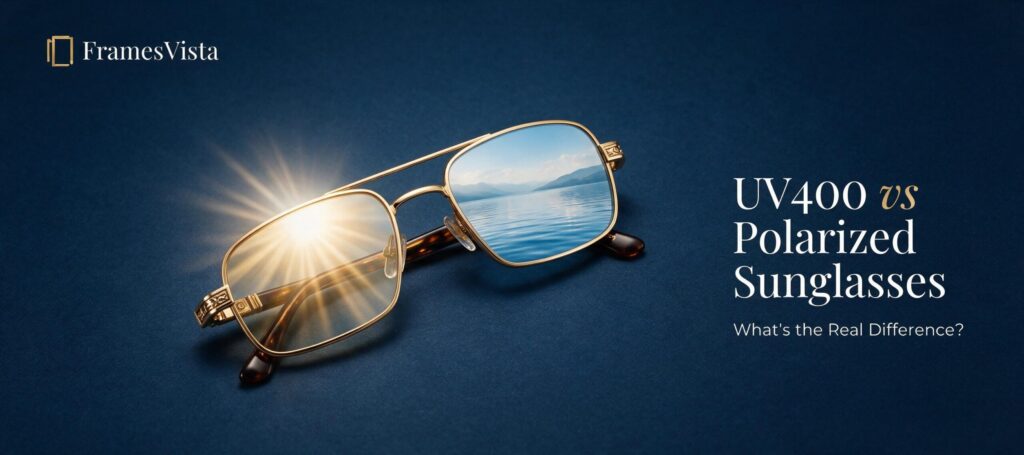

Choosing the right sunglasses isn’t just about style—it’s also about protecting your eyes and improving visual comfort. One of the biggest questions buyers have is whether they should choose polarized or non-polarized sunglasses.
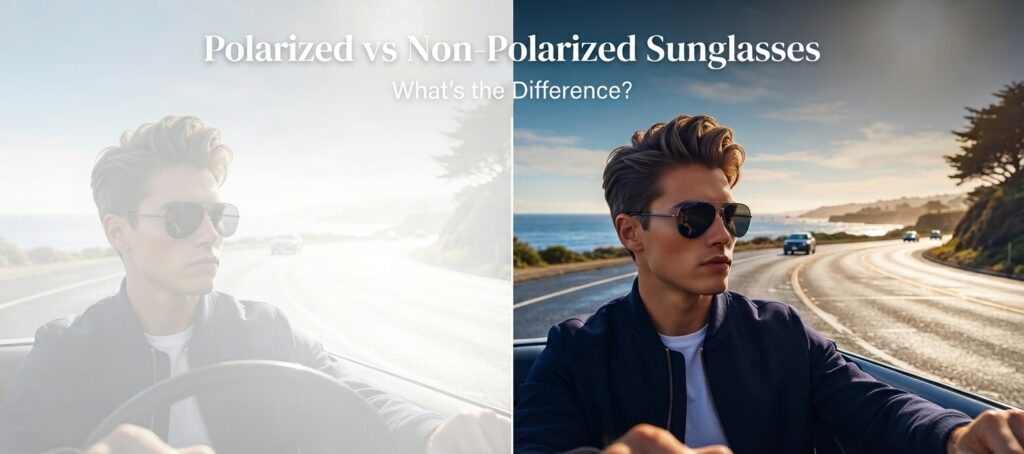
Although both types provide UV protection (if made with quality lenses), they serve different purposes. Polarized sunglasses are designed to reduce glare from reflective surfaces like roads, water, and snow, while non-polarized sunglasses simply reduce brightness without eliminating reflected glare.
Understanding the difference can help you select the best sunglasses for driving, outdoor sports, travel, daily wear, or professional use.
In this complete FramesVista guide, we’ll explain how polarized and non-polarized lenses work, compare their advantages and disadvantages, and help you decide which option best suits your lifestyle.
Quick Answer
If you spend a lot of time driving, fishing, boating, hiking, or outdoors in bright sunlight, polarized sunglasses are usually the better choice because they significantly reduce glare and improve visual clarity.
On the other hand, non-polarized sunglasses are often preferred for everyday casual wear, certain sports, and situations where viewing digital screens or instrument displays is important.
The best choice ultimately depends on your daily activities, work environment, and personal preferences.
Table of Contents
- What Are Polarized Sunglasses?
- What Are Non-Polarized Sunglasses?
- How Polarized Lenses Work
- Polarized vs Non-Polarized: Key Differences
- Pros and Cons of Each
- Which One Should You Choose?
- Best for Driving
- Best for Fishing & Outdoor Sports
- Common Myths About Polarized Sunglasses
- Frequently Asked Questions
- Final Verdict
What Are Polarized Sunglasses?
Polarized sunglasses are specially designed eyewear that reduce glare caused by sunlight reflecting off flat surfaces such as water, roads, snow, glass, and car hoods. Unlike regular tinted lenses, polarized lenses contain a special filter that blocks intense horizontal light waves while allowing useful vertical light to pass through.
This results in sharper vision, better contrast, reduced eye strain, and improved comfort during outdoor activities.
Whether you’re driving on a sunny highway, fishing by a lake, or spending time at the beach, polarized sunglasses can significantly improve visual clarity and reduce discomfort caused by harsh reflections.
How Do Polarized Lenses Work?
Sunlight travels in all directions, but when it reflects from smooth surfaces, it becomes horizontally polarized. This horizontal light creates the intense glare that makes it difficult to see clearly.
Polarized lenses contain a microscopic vertical filter that blocks these horizontal light rays while allowing normal light to enter your eyes.
As a result, you experience:
- Reduced glare from roads and water
- Sharper and clearer vision
- Better color contrast
- Improved visual comfort
- Less eye fatigue during long outdoor use
Main Benefits of Polarized Sunglasses
1. Excellent Glare Reduction
The biggest advantage is glare elimination. This makes driving, boating, fishing, cycling, and hiking much safer and more comfortable.
2. Better Visual Clarity
Objects appear more defined with improved contrast, making it easier to notice details.
3. Reduced Eye Fatigue
Because your eyes don’t have to constantly adjust to bright reflections, they stay more relaxed during extended outdoor use.
4. Better Outdoor Experience
Colors appear richer, skies look deeper blue, and landscapes become easier to enjoy without harsh reflections.
5. Improved Driving Safety
Polarized lenses reduce glare from wet roads, windshields, and reflective vehicles, helping drivers maintain better visibility during daylight.
Common Uses for Polarized Sunglasses
Polarized sunglasses are ideal for:
- Driving
- Fishing
- Boating
- Beach vacations
- Hiking
- Cycling
- Running
- Golf
- Water sports
- Snow activities
They are especially useful whenever you’re exposed to bright sunlight and reflective surfaces.
What Are Non-Polarized Sunglasses?
Non-polarized sunglasses are traditional sunglasses that reduce the overall brightness of sunlight but do not contain a special filter to block reflected glare. They protect your eyes from harmful UV rays (if equipped with UV400 protection) and make outdoor environments more comfortable by reducing light intensity.
Unlike polarized lenses, non-polarized sunglasses allow both horizontal and vertical light rays to pass through. As a result, bright reflections from roads, water, glass, or snow remain visible.
For many everyday situations, however, non-polarized sunglasses still provide excellent eye protection and visual comfort.
Benefits of Non-Polarized Sunglasses
1. Natural Screen Visibility
One advantage of non-polarized sunglasses is that they generally allow you to view:
- Smartphone screens
- Car infotainment systems
- Digital dashboards
- GPS devices
- Aircraft instruments
more easily than some polarized lenses.
2. More Affordable
Non-polarized sunglasses are usually available at a lower price, making them a great option for everyday casual use.
3. Wide Variety of Styles
Since they don’t require a polarization filter, manufacturers often offer a broader range of designs, colors, and lens options.
4. Suitable for Daily Wear
If your primary goal is reducing sunlight and protecting your eyes from UV rays during everyday activities, non-polarized sunglasses are often more than sufficient.
Limitations of Non-Polarized Sunglasses
Although they provide UV protection, they do not significantly reduce glare.
This means you may still notice strong reflections from:
- Wet roads
- Water surfaces
- Snow
- Glass buildings
- Car windshields
These reflections can contribute to visual discomfort during extended outdoor activities.
Polarized vs Non-Polarized Sunglasses
Understanding the key differences makes it easier to choose the right pair.
| Feature | Polarized | Non-Polarized |
|---|---|---|
| UV Protection | Yes (if UV400) | Yes (if UV400) |
| Glare Reduction | Excellent | Minimal |
| Driving Comfort | Excellent | Good |
| Water Activities | Excellent | Average |
| Outdoor Sports | Excellent | Good |
| Digital Screen Visibility | May vary depending on the screen | Usually better |
| Color & Contrast | Enhanced | Natural |
| Price | Generally higher | Generally more affordable |
Pros and Cons
Polarized Sunglasses
Pros
- Excellent glare reduction
- Improved visual clarity
- Better color contrast
- Reduced eye fatigue
- Ideal for driving and outdoor activities
- Comfortable in bright sunlight
Cons
- May make some digital screens harder to read
- Usually more expensive than non-polarized options
Non-Polarized Sunglasses
Pros
- Affordable
- Good UV protection
- Better compatibility with digital displays
- Wide variety of frame styles
- Great for everyday casual use
Cons
- Do not effectively eliminate glare
- Less comfortable around highly reflective surfaces
- Reduced contrast compared to polarized lenses
Which One Should You Choose?
The right choice depends on how you plan to use your sunglasses.
Choose polarized sunglasses if you:
- Drive frequently during the day
- Spend time near water
- Enjoy fishing or boating
- Participate in outdoor sports
- Want maximum glare reduction
Choose non-polarized sunglasses if you:
- Need basic sun protection
- Frequently use digital displays while wearing sunglasses
- Want a more budget-friendly option
- Primarily wear sunglasses for casual everyday use
There is no universally “better” option—only the one that best matches your lifestyle.
Best for Driving
If you spend a lot of time behind the wheel, polarized sunglasses are often the preferred choice. Bright sunlight reflecting off roads, car hoods, and other vehicles can create intense glare that reduces visibility and causes eye fatigue.
Polarized lenses help minimize these reflections, allowing you to see the road more clearly and drive more comfortably during sunny conditions.
Benefits for Drivers
- Reduced glare from wet and dry roads
- Improved visual clarity
- Better contrast while driving
- Less eye fatigue on long journeys
- More comfortable daytime driving
Tip: Choose sunglasses that offer both polarization and UV400 protection for the best combination of comfort and eye protection.
Best for Fishing, Boating & Outdoor Sports
Polarized sunglasses are especially popular among outdoor enthusiasts because they reduce reflections from water and other reflective surfaces.
Activities that benefit the most include:
- Fishing
- Boating
- Kayaking
- Beach trips
- Hiking
- Cycling
- Golf
- Running
- Camping
By reducing glare, polarized lenses make it easier to see details and enjoy outdoor environments more comfortably.
Common Myths About Polarized Sunglasses
There are many misconceptions about polarized lenses. Let’s separate fact from fiction.
Myth 1: Polarized Sunglasses Provide Better UV Protection
Fact: Polarization and UV protection are two different features.
A pair of non-polarized sunglasses with UV400 protection can block harmful ultraviolet rays just as effectively as polarized sunglasses. Polarization primarily reduces glare—it does not automatically mean better UV protection.
Myth 2: Everyone Needs Polarized Sunglasses
Fact: Not necessarily.
If you mostly wear sunglasses for casual walks, shopping, or short outdoor trips, a quality pair of non-polarized UV400 sunglasses may be perfectly suitable.
The best choice depends on your daily activities and personal preferences.
Myth 3: Polarized Lenses Make Colors Artificial
Fact: No.
High-quality polarized lenses typically improve contrast and reduce glare without making colors appear unnatural. In many situations, landscapes and skies may actually appear more vivid because distracting reflections are minimized.
Myth 4: Polarized Sunglasses Are Only for Water Sports
Fact: While they are excellent for boating and fishing, polarized sunglasses are also highly beneficial for:
- Driving
- Cycling
- Hiking
- Traveling
- Beach vacations
- Everyday outdoor use
Frequently Asked Questions
Can polarized sunglasses be worn every day?
Yes. Many people wear polarized sunglasses daily because they provide excellent comfort during bright outdoor conditions.
Are polarized sunglasses better for driving?
For most daytime driving situations, yes. They reduce glare from roads and other reflective surfaces, making driving more comfortable and helping improve visual clarity.
Do polarized sunglasses block UV rays?
Only if they include UV400 or equivalent UV protection. Always check the product specifications, as polarization alone does not guarantee UV protection.
Can I use polarized sunglasses while looking at digital screens?
Some digital screens, dashboards, or instrument displays may appear darker or show rainbow-like patterns when viewed through polarized lenses. This depends on the screen technology and viewing angle.
Which sunglasses should I buy?
If your priority is:
- Driving
- Outdoor sports
- Fishing
- Boating
- Hiking
→ Polarized sunglasses are generally the better choice.
If you mainly need:
- Everyday casual wear
- Budget-friendly eyewear
- Frequent use of digital displays while wearing sunglasses
→ Non-polarized sunglasses can be an excellent option.
Final Verdict
Both polarized and non-polarized sunglasses have their own advantages. The right choice depends on how and where you plan to wear them.
If glare reduction and maximum outdoor comfort are your priorities, polarized sunglasses are worth considering. On the other hand, if you simply need reliable UV protection for everyday use, non-polarized sunglasses can still provide excellent performance.
Whichever option you choose, make sure your sunglasses offer 100% UVA and UVB protection (UV400), fit comfortably, and match your lifestyle. Investing in quality eyewear helps protect your eyes while improving comfort and visual clarity during daily activities.
Related Articles
Continue exploring our eyewear guides:
- The Complete Eye Care Guide
- Blue Light Glasses: Myths vs Facts
- How to Choose the Right Eyeglass Frames for Your Face Shape
- The Complete Guide to Reading Glasses
These resources will help you make informed decisions about eye protection, eyewear selection, and maintaining healthy vision.