

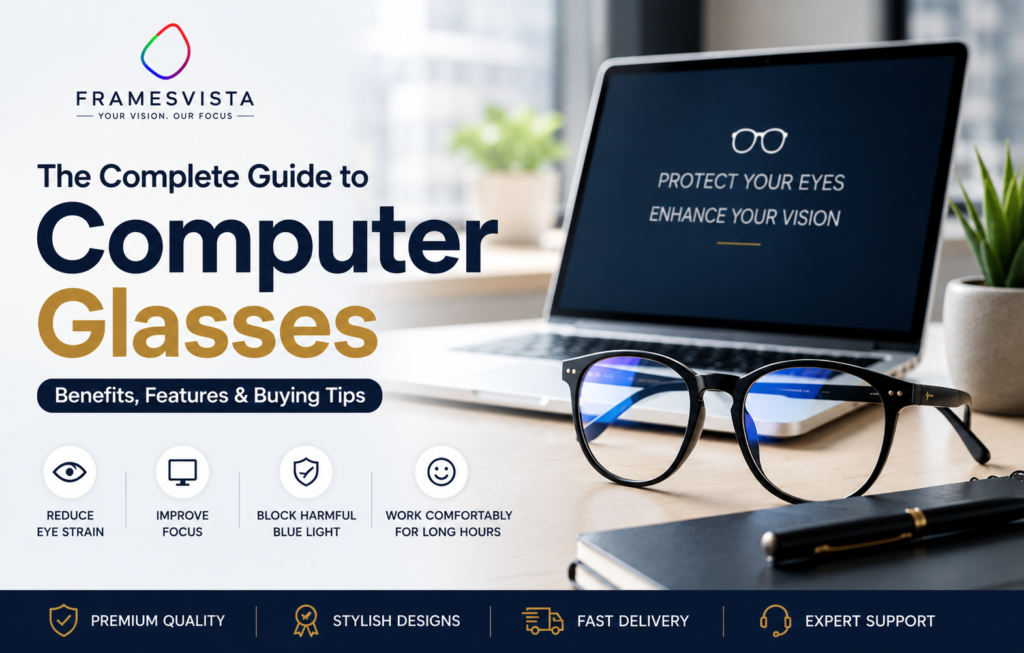
The Complete Guide to Computer Glasses: Benefits, Features & Buying Tips
Introduction
Whether you’re working from home, attending online classes, gaming, or simply scrolling through your favorite websites, chances are you spend several hours looking at digital screens every day. While technology has made life easier, prolonged screen time has also introduced a new challenge—digital eye strain.
Many people experience tired eyes, headaches, blurred vision, or dry eyes after using a computer for long periods. This is where computer glasses can make a noticeable difference. Designed specifically for digital device users, computer glasses help improve visual comfort, reduce glare, and support healthier screen habits.
In this complete guide, you’ll learn what computer glasses are, how they work, their benefits, the features that matter most, and how to choose the right pair for your daily routine.
Quick Answer
Computer glasses are specially designed eyewear created to make viewing digital screens more comfortable. They often include anti-reflective coatings, blue light filtering technology, and optimized lens designs that help reduce glare, improve focus, and minimize digital eye strain during extended screen use.
Table of Contents
- What Are Computer Glasses?
- Why Digital Screens Affect Your Eyes
- Common Symptoms of Digital Eye Strain
- How Computer Glasses Work
- Blue Light: Facts vs Myths
- Benefits of Computer Glasses
- Essential Features to Look For
- How to Choose the Right Computer Glasses
- Computer Glasses vs Reading Glasses
- Who Should Wear Computer Glasses?
- Healthy Screen Habits
- Frequently Asked Questions
- Final Thoughts
What Are Computer Glasses?
Computer glasses are eyewear designed specifically for viewing digital screens at an intermediate distance, typically between 20 and 30 inches from your eyes.
Unlike regular prescription glasses, which are usually optimized for distance or reading, computer glasses are designed for the distance where computer monitors, laptops, and desktop screens are commonly placed.
Many computer glasses include features such as:
- Anti-reflective coating
- Blue light filtering
- Scratch-resistant coating
- UV protection
- Comfortable lightweight frames
- Optimized lens power for screen viewing
These features work together to provide a more comfortable viewing experience during extended computer use.
Why Digital Screens Affect Your Eyes
Digital screens demand more visual effort than printed materials. Small text, bright displays, reflections, poor lighting, and long periods without blinking all contribute to eye fatigue.
When staring at a screen, people naturally blink less often. Reduced blinking causes tears to evaporate more quickly, leading to dryness and irritation.
Several workplace factors can also increase discomfort:
- Bright overhead lighting
- Screen glare
- Poor monitor positioning
- Incorrect viewing distance
- Improper posture
- Continuous work without breaks
Over time, these factors may contribute to digital eye strain, also known as Computer Vision Syndrome (CVS).
Common Symptoms of Digital Eye Strain
If you spend several hours in front of digital devices, you may experience:
- Eye fatigue
- Dry eyes
- Burning sensation
- Blurred vision
- Difficulty focusing
- Headaches
- Neck pain
- Shoulder pain
- Sensitivity to light
- Watery eyes
These symptoms are usually temporary but can affect productivity and overall comfort if ignored.
How Computer Glasses Work
Computer glasses are designed to make screen viewing more comfortable by improving the way your eyes focus on digital displays. Unlike ordinary glasses, they are optimized for intermediate viewing distances, which is where most monitors, laptops, and desktop screens are positioned.
Here’s how they help:
Reduce Screen Glare
Reflections from windows, office lighting, or bright displays force your eyes to work harder. Anti-reflective (AR) coatings reduce these reflections, making text appear clearer and easier to read.
Improve Visual Comfort
Computer lenses help your eyes focus naturally at screen distance, reducing the constant effort your eye muscles make throughout the day.
Filter Selected Blue Light
Many computer glasses include blue light filtering technology. While research is still evolving on blue light itself, these lenses may improve visual comfort for some users and reduce glare from digital displays.
Support Better Productivity
When your eyes are more comfortable, you may experience fewer interruptions caused by headaches, eye fatigue, or blurry vision, allowing you to work more efficiently.
Blue Light: Facts vs Myths
Blue light has become one of the most talked-about topics in digital eyewear, but there are also many misconceptions.
Fact: Digital Devices Emit Blue Light
Computers, smartphones, tablets, televisions, and LED lighting all emit blue light.
Myth: Blue Light Permanently Damages Your Eyes
Current scientific evidence does not strongly support the claim that blue light from everyday digital devices permanently damages healthy eyes.
However, prolonged screen use can contribute to:
- Eye fatigue
- Dry eyes
- Visual discomfort
- Sleep disruption when devices are used before bedtime
Fact: Screen Time Is Often the Bigger Problem
For most people, the discomfort isn’t caused only by blue light. It’s usually a combination of:
- Long screen sessions
- Reduced blinking
- Poor posture
- Bright displays
- Glare
- Incorrect viewing distance
Computer glasses help address several of these issues together.
Benefits of Computer Glasses
People who spend several hours using digital devices may notice significant improvements after switching to computer glasses.
1. Reduced Eye Fatigue
One of the biggest advantages is reduced eye strain during long work sessions.
2. Better Visual Comfort
Sharper, clearer vision at screen distance allows your eyes to relax.
3. Less Glare
Anti-reflective coatings reduce annoying reflections from office lighting and computer monitors.
4. Improved Focus
Comfortable vision helps maintain concentration during work, study, or gaming.
5. Better Posture
When you can see your screen clearly, you’re less likely to lean forward or crane your neck.
6. Reduced Headaches
Many users report fewer tension headaches related to prolonged screen use, especially when glare and focusing effort are reduced.
7. Improved Screen Experience
Whether you’re attending virtual meetings, editing photos, coding, reading documents, or watching videos, computer glasses can make extended screen sessions feel more comfortable.
Essential Features to Look For
Not all computer glasses are the same. Before buying a pair, consider these important features.
Blue Light Filtering
Choose lenses that filter a portion of blue light without heavily distorting colors, especially if you work with design or photography.
Anti-Reflective Coating
This is one of the most valuable features. It reduces reflections and improves visual clarity.
Scratch Resistance
A scratch-resistant coating helps maintain clear vision and extends the life of your lenses.
Lightweight Frame
Comfort matters if you’ll be wearing the glasses for several hours every day.
Look for lightweight materials that provide a secure yet comfortable fit.
Proper Lens Quality
High-quality optical lenses offer:
- Better clarity
- Less distortion
- More comfortable viewing
- Longer durability
Cheap lenses may introduce unwanted reflections or visual distortions.
UV Protection
If you also use your glasses outdoors occasionally, UV protection adds another layer of eye safety.
How to Choose the Right Computer Glasses
Choosing the right computer glasses isn’t just about style—it’s about finding a pair that matches your screen habits, work environment, and visual needs. The right glasses should improve comfort without compromising clarity.
Here are the key factors to consider before buying.
1. Know Your Daily Screen Time
Think about how many hours you spend in front of digital devices.
- 2–4 hours/day: Basic anti-reflective lenses may be enough.
- 5–8 hours/day: Consider lenses with blue light filtering and premium AR coating.
- 8+ hours/day: Choose high-quality computer glasses designed for extended digital use.
The more time you spend on screens, the more important lens quality becomes.
2. Decide Whether You Need Prescription Lenses
If you already wear prescription glasses, ask your eye care professional whether computer-specific prescription lenses would be beneficial.
If your vision is normal, non-prescription computer glasses may still help reduce glare and improve visual comfort.
3. Look for Premium Lens Coatings
Good coatings make a noticeable difference.
Recommended features include:
- Anti-reflective coating
- Scratch-resistant coating
- Smudge-resistant coating
- Water-resistant coating
- Blue light filtering (optional)
These coatings improve durability and make everyday use more comfortable.
4. Choose a Comfortable Frame
Since you’ll likely wear these glasses for several hours, comfort is essential.
Look for:
- Lightweight materials
- Flexible temples
- Adjustable nose pads (if available)
- Medium-size frame for balanced coverage
A comfortable frame encourages longer wear without pressure on the nose or ears.
5. Match the Glasses to Your Work Environment
Different users have different needs.
Office Professionals
Prioritize comfort, anti-glare coating, and lightweight frames.
Students
Choose durable, affordable glasses suitable for long study sessions.
Gamers
Look for wide lenses, comfortable frames, and coatings that reduce reflections during long gaming sessions.
Content Creators & Designers
If accurate color perception matters, choose lenses that offer subtle blue light filtering rather than heavily tinted lenses.
Computer Glasses vs Reading Glasses
Many people confuse computer glasses with reading glasses, but they serve different purposes.
| Computer Glasses | Reading Glasses |
|---|---|
| Designed for digital screens | Designed for books and close reading |
| Optimized for intermediate distance | Optimized for close distance |
| Often include anti-reflective coating | Usually no special screen coating |
| May include blue light filtering | Usually don’t include blue light filters |
| Suitable for office work | Suitable for reading printed text |
If your primary activity is working on a computer, dedicated computer glasses are generally a better choice than standard reading glasses.
Who Should Wear Computer Glasses?
Computer glasses can benefit anyone who regularly uses digital devices.
They are especially useful for:
- Office professionals
- Students
- Software developers
- Graphic designers
- Video editors
- Content creators
- Gamers
- Online teachers
- Customer support executives
- Work-from-home professionals
Even people without prescription vision problems may find them more comfortable during long screen sessions.
Healthy Screen Habits
Computer glasses work best when combined with healthy screen habits.
Follow the 20-20-20 Rule
Every 20 minutes:
- Look at something about 20 feet away.
- Focus on it for at least 20 seconds.
This simple habit helps relax your eye muscles.
Blink More Often
People naturally blink less while using screens.
Make a conscious effort to blink regularly to keep your eyes lubricated.
Adjust Screen Brightness
Your display should be similar in brightness to the surrounding room—not excessively bright or too dim.
Maintain Proper Distance
Keep your monitor approximately:
- 20–28 inches away
- Slightly below eye level
This encourages a more natural head and neck position.
Reduce Reflections
Position your screen to avoid direct reflections from windows or overhead lights.
Keep Your Screen Clean
Dust and fingerprints reduce clarity and increase glare.
Clean your display regularly using a microfiber cloth.
Stay Hydrated
Adequate hydration supports natural tear production, which helps keep your eyes comfortable during long work sessions.
Frequently Asked Questions
Do computer glasses really work?
Many people experience improved visual comfort, reduced glare, and less eye fatigue while using computer glasses. Individual results may vary depending on screen habits and vision needs.
Can I wear computer glasses all day?
Yes. Most computer glasses are designed for extended daily use, especially during work or study. If you wear prescription lenses, consult your eye care professional about the most suitable option.
Do computer glasses improve eyesight?
No. Computer glasses don’t permanently improve vision. Their purpose is to enhance comfort and reduce strain while viewing digital screens.
Are blue light glasses necessary?
Not everyone needs blue light filtering. For many users, anti-reflective coatings, proper screen habits, and regular breaks provide significant benefits. Blue light filtering can be an additional comfort feature depending on your needs.
Can children use computer glasses?
Children who spend considerable time on digital devices may benefit from appropriate eyewear if recommended by an eye care professional. Good screen habits and regular eye examinations remain equally important.
Final Thoughts
Digital devices are an essential part of modern life, but spending hours in front of screens doesn’t have to mean tired, uncomfortable eyes.
The right pair of computer glasses—combined with healthy viewing habits, proper posture, regular breaks, and a well-designed workspace—can significantly improve your daily screen experience.
When choosing computer glasses, focus on quality lenses, effective anti-reflective coatings, comfortable frames, and features that suit your lifestyle rather than marketing claims alone.
Whether you’re working, studying, gaming, or creating content, investing in comfortable digital eyewear is an investment in your long-term visual comfort and productivity.